
Connecting with the Roots: A 2026 Amazigh Cultural Immersion
To truly understand North Africa, you must connect with its original inhabitants. Maroc Explore presents our deeply respectful 2026 guide to engaging with the indigenous Amazigh (Berber) communities of the Anti-Atlas and Draa regions. This is not a standard sightseeing tour; it is a profound journey into a way of life that has thrived for millennia. We highlight the critical importance of culturally sensitive, sustainable exchange. You will leave the massive coastal resorts behind to discover traditional agrarian lifestyles, ancient mud-brick architecture, and the laborious, awe-inspiring process of hand-crafting pure Argan oil.
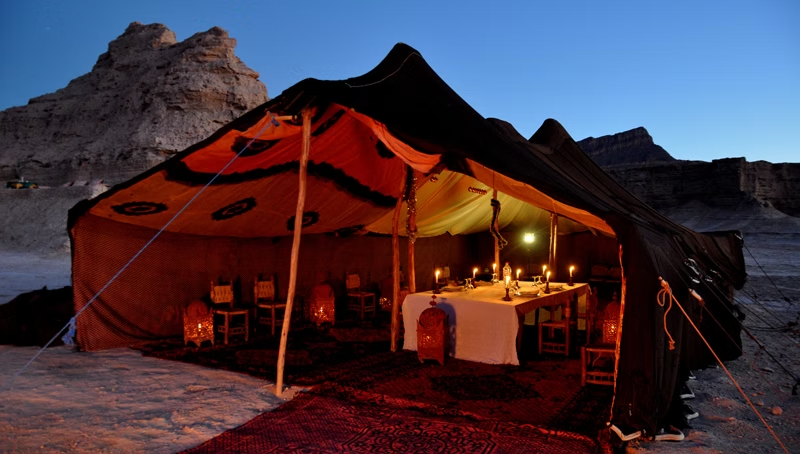 Sharing authentic meals and cultural traditions with local Amazigh families in the foothills with Maroc Explore.
The Free People: Who are the Amazigh?
The name "Amazigh" (plural: Imazighen) means "The Free People." In 2026, there is a global recognition of the importance of indigenous cultures, and the Amazigh are at the forefront of Morocco's national identity. On a Maroc Explore immersion, our guides—who are often from these exact communities—explain the complex social structure, the importance of the clan, and the unique, ancient Tamazight language. You'll see the "Tifinagh" script on signs and in art, a visual connection to a prehistoric past. Understanding that the Amazigh are the bedrock of Moroccan culture is essential to appreciating the country's spirit of resilience and hospitality.
The "Liquid Gold": Argan Oil Cooperatives
The southwestern region of Morocco is the only place in the world where the Argan tree grows naturally. We take our guests into the heart of the "Argan Forest" to visit women's cooperatives. In 2026, Maroc Explore ensures that your visit directly supports these hardworking women. You will watch the tedious process of cracking the hard nuts between two stones and grinding them on a traditional "quern" to produce both culinary and cosmetic Argan oil. This is "ethical consumerism" in its purest form. Smelling the toasted nuts and tasting the "Amlou" (Argan, almond, and honey dip) is a sensory connection to the land and the women who sustain it.
Earthen Architecture: The Science of the Kasbash
Amazigh architecture is a masterclass in sustainability. We explore traditional villages built from "Pisé" (rammed earth), where the homes are naturally insulated against the searing summer heat and the freezing winter nights of the plateau. Maroc Explore's guides explain the construction techniques that have allowed these "castles of the sand" to stand for centuries without the need for modern materials. You'll see the communal granaries ("Agadirs") that were once the safe-deposit boxes of nomadic tribes. In 2026, as the world seeks "eco-friendly" building solutions, these ancient Amazigh techniques are being studied by modern architects as models for the future.
The Shared Table: Communal Dining and Connection
The culmination of any cultural immersion is the meal. We sit with a local family in their home, often cross-legged on woven carpets around a low "Mida" table. This is where the true cultural exchange happens. We enjoy "Tagine n'Ait"—slow-simmered mountain tagines made with homegrown vegetables and local olive oil. Maroc Explore emphasizes the communal nature of the meal: one large plate, shared by everyone. Our guides serve as cultural interpreters, facilitating genuine conversations and shared laughter that transcend language barriers. It's a moment of pure human connection, a reminder that despite our different backgrounds, the joy of a shared meal is universal.
Textiles of the Soul: The Weaver's Art
Amazigh women are the keepers of the tribe's history, which they weave into their complex rugs and textiles. We take our guests to the looms where women still use hand-spun wool and natural dyes from madder root, indigo, and pomegranate skins. Every geometric pattern—the diamond, the zigzag, the eye—has a specific symbolic meaning related to family, fertility, and protection. In 2026, Maroc Explore works directly with these weavers to ensure they receive a fair price for their incredible work. Buying a rug directly from the weaver is a way of taking home a piece of "Intangible Heritage" that will stay in your family for generations.
The Rhythm of the Roots: Music and Poetry
As the sun sets over the mountains, the sounds of the "Bendir" (frame drum) and the "Lotar" (lute) begin to echo. Amazigh music is a collective, rhythmic experience, often accompanied by traditional poetry ("Amdyaz"). We organize private evening performances where you can witness the hypnotic dances and chants that have been used to mark seasons and celebrations for thousands of years. In 2026, this "unplugged" musical experience is a powerful antidote to our digital world—a raw, visceral connection to the rhythms of the earth. At Maroc Explore, we believe that hearing these songs in their original setting is the ultimate way to touch the soul of the "Free People."
2026 Immersion Practical Navigator
- Respectful Attire: When visiting traditional villages, dress modestly. Loose, comfortable trousers or long skirts and shirts that cover the shoulders are recommended.
- Photography: This is a deeply personal visit. Always ask permission before taking photos of people or inside homes. Your guide will handle the protocol.
- Gifts: If you'd like to bring something for your hosts, small useful items or quality sweets are appreciated. Avoid giving money directly to children.
- Footwear: Village paths are often uneven and rocky. Sturdy walking shoes are a must.
The Amazigh Legacy
An immersion into Amazigh culture is a journey of the spirit. It's a chance to see the world through the eyes of a people who have lived in harmony with the land for millennia. At Maroc Explore, we are proud to be your bridge to these ancient roots. Join us in 2026 to discover why the spirit of the "Free People" continues to be the heart of Morocco.