
Navigating the Labyrinth: The 2026 Guide to Marrakech's Medina
Marrakech is a city of layers, and nowhere is this more evident than within the 10th-century walls of its Medina. At Maroc Explore, we've spent a decade unraveling the threads of this magnificent "Red City." In 2026, Marrakech has evolved into a global hub of design and culture, but its heart remains beating in the narrow, spice-scented alleyways of the old town. This guide is designed to take you beyond the tourist surface, offering a historian's perspective on the architecture, the artisans, and the hidden gardens that make Marrakech a sensory masterpiece.
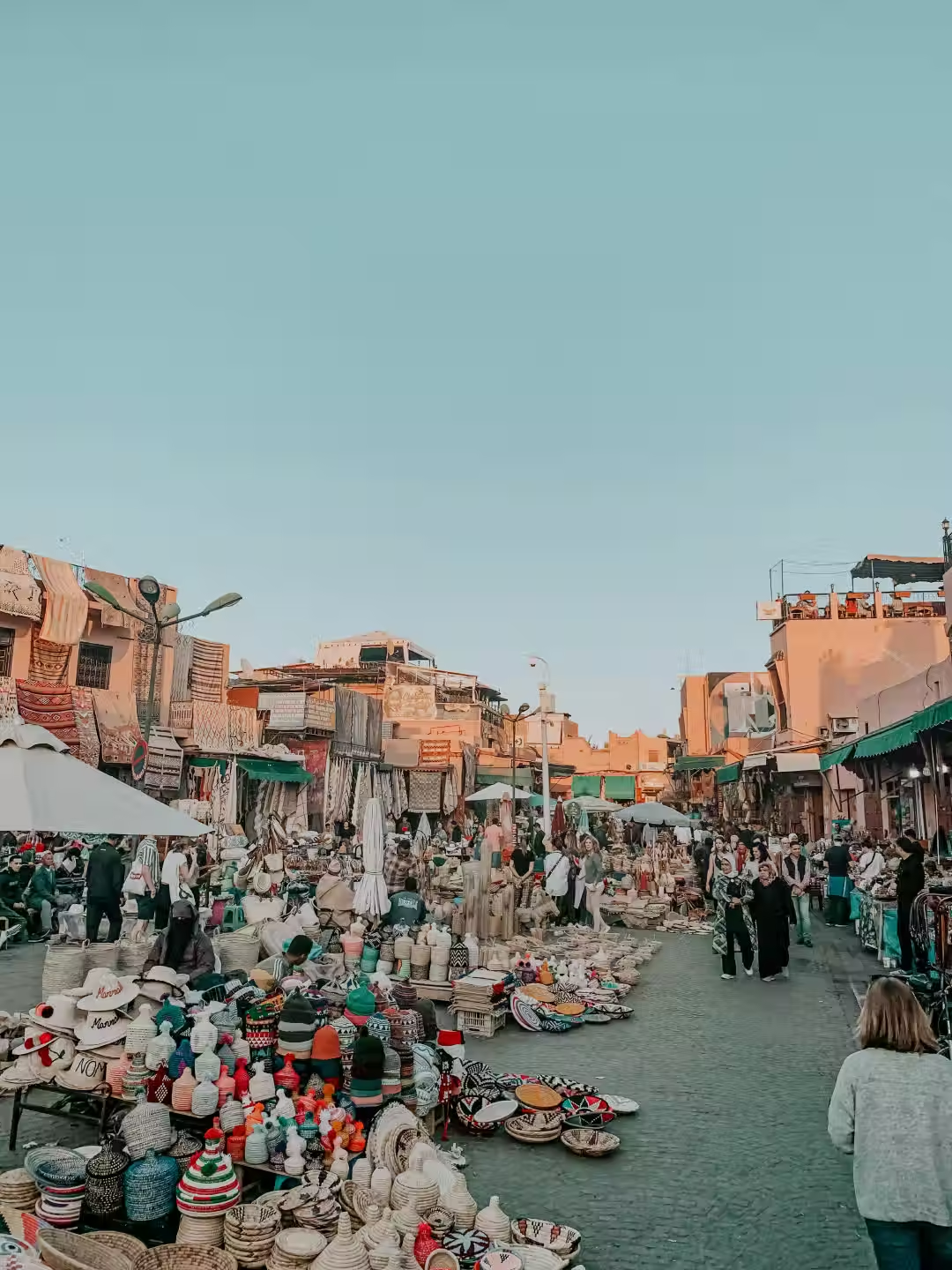 Entering the vibrant, historic heart of the Marrakech Medina with Maroc Explore.
The Architectural Language of the Ochre City
Marrakech's nickname, the "Ochre City," comes from the local red earth used to construct its walls and buildings. But look closer, and you'll see a complex language of Islamic architecture. From the towering Koutoubia Minaret—the spiritual anchor of the city—to the intricate cedarwood carvings of the Bahia Palace, the city is a testament to the Almohad, Saadian, and Alaouite dynasties. Maroc Explore's historian guides explain the "Riads" (traditional houses with internal gardens) as metaphors for the Islamic paradise: plain and unassuming on the outside, but lush, tiled, and peaceful on the inside. Understanding this "secretive" architecture is key to appreciating the city's unique charm.
The Art of the Souk: A Masterclass in Craftsmanship
The souks are not just markets; they are a living museum of artisan history. In 2026, there is a renewed global appreciation for hand-crafted goods, and Marrakech is the epicenter. We take our guests into the specialized quarters that most visitors skip. See the "Dyers Souk" where wool is still colored in massive steaming vats using indigo, saffron, and poppy petals. Watch the copper beaters shaping massive platters with rhythmic precision, a sound that has echoed through these streets for five hundred years. At Maroc Explore, we emphasize ethical shopping, introducing you to cooperatives where the profit goes directly to the master craftsmen and women, ensuring these ancient skills are passed to the next generation.
The Jewish Quarter (Mellah): A Story of Synthesis
Morocco's history is one of diversity, and the Mellah of Marrakech is a profound example. Established in the 16th century, this district was once the center of Jewish life in the city. Today, it remains a vibrant neighborhood where you can visit the Lazama Synagogue and the historic Jewish cemetery. Walking through the Mellah with Maroc Explore reveals a different side of the city's architectural and social history. The houses here often have balconies overlooking the street—a sharp contrast to the inward-facing Islamic designs of the rest of the medina. This synthesis of cultures is what gives Marrakech its cosmopolitan "soul."
Escaping the Chaos: Secret Gardens and Quiet Riads
The energy of the medina can be overwhelming, but Marrakech excels at providing sanctuaries. Beyond the famous (and often crowded) Majorelle Garden, there are dozens of "Le Jardin Secret" locations and private riads that offer absolute tranquility. Our tours include planned "pause points" in these hidden gems. Sipping mint tea in a marble courtyard, listening to the drip of a fountain and the birds in the orange trees, is an essential part of the Marrakech experience. We teach our guests how to find these pockets of peace, transforming a potentially stressful day into a balanced, luxury wandering experience.
Jemaa el-Fnaa: The World's Greatest Open-Air Theater
As the sun sets, all roads in the medina lead to Jemaa el-Fnaa. This square is a UNESCO Masterpiece of the Oral and Intangible Heritage of Humanity. In 2026, it remains as chaotic and captivating as ever. From the Halqa (circles) surrounding storytellers and Gnaoua musicians to the sprawling nightly food market, it is a sensory overload. Maroc Explore guides help you navigate this space safely, showing you how to enjoy the spectacles without feeling pressured. We recommend ending your tour on a rooftop terrace, watching the square transform from a dusty marketplace into a lit-up festival of fire-eaters, acrobats, and thousands of hungry locals.
2026 Navigation and Etiquette Tips
- The Google Maps Myth: In the deepest parts of the medina, GPS often fails. Learn to look for landmarks: the height of the Koutoubia, a specific archway, or the direction of the flow of people.
- Friendly Haggling: It's a conversation, not a battle. A smile and a "La, Shokran" (No, thank you) go further than a frustrated tone. We'll teach you the "middle ground" price.
- Respectful Photography: Always ask permission before photographing people, especially artisans at work. A small tip is often appreciated as a token of thanks for their time.
- Sustainable Transport: Whenever possible, walk. The medina was built for feet and hooves, not motors.
The Marrakech Legacy
Living in the Marrakech Medina for even a day changes you. The colors stay brighter in your memory, the scent of cumin and cedarwood lingers, and the warmth of the people reminds you of the beauty of human connection. At Maroc Explore, our goal is to ensure you fall in love with the city just as we have. Join us in 2026 for a journey through the red walls that you will never forget.