
The Ambition of a Sultan: A 2026 Guide to Meknes
Often overlooked in favor of its more famous neighbor Fes, Meknes is a monumental city with a unique, regal dignity. At Maroc Explore, we've long championed Meknes as the "understated giant" of the Imperial Cities. In 2026, as travelers seek to avoid the crowds of Marrakech, Meknes has emerged as a sophisticated alternative. Built by the famously ambitious 17th-century Sultan Moulay Ismail, the city was intended to rival the grandeur of Versailles. This guide explores its colossal gates, its vast underground spaces, and the quiet power of its Ismaili architecture.
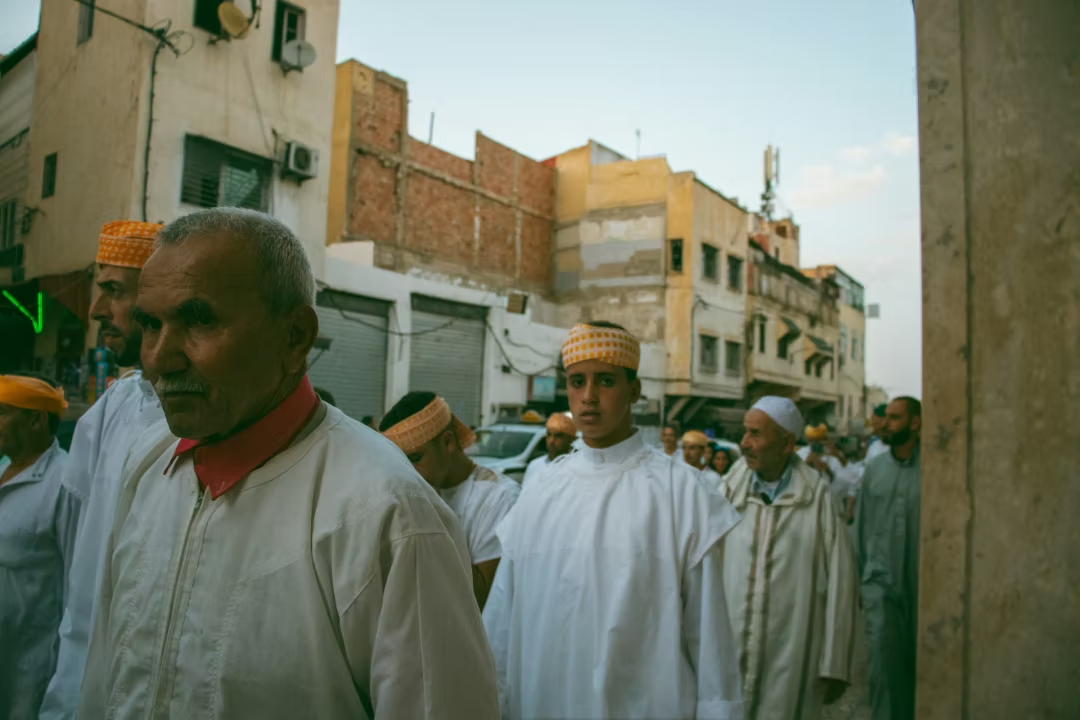 Standing in awe beneath the towering arches of Bab Mansour in Meknes with Maroc Explore.
Moulay Ismail's Vision: The Architecture of Power
Every stone in Meknes tells the story of the second Sultan of the Alaouite dynasty. Moulay Ismail chose Meknes as his capital and spent 50 years transforming it with 25 miles of massive walls and dozens of monumental gates. The most famous, "Bab Mansour," is widely considered the most beautiful gate in North Africa. Maroc Explore's historian guides point out the salvaged Roman columns from Volubilis incorporated into the gate—a powerful symbol of triumph over the ancient past. Understanding this architecture is key to realizing that Meknes wasn't just built for beauty; it was built for defense and as a display of absolute authority that still resonates in 2026.
The Underground City: Granaries and Stables
The true scale of Moulay Ismail's ambition is hidden from the surface. We take our guests into the "Heri es-Souani"—a colossal complex of granaries and royal stables designed to house 12,000 horses and enough grain to feed a massive army for years. The engineering is staggering: massive vaulted ceilings and ingenious natural air-conditioning systems that kept the grain cool and dry. Walking through these echoing, sun-dappled halls is a surreal experience. It's a testament to the logistical brilliance that supported the Sultan's reign, providing a physical sense of the power and scale of the Moroccan empire at its peak.
The Peaceful Medina: A Different Pace of Life
Unlike the frenetic energy of Fes, the Meknes Medina is remarkably laid-back. It's a place where you can stroll without the constant pressure of the "hard sell." We take our guests into the specialized quarters for embroidery and woodcarving, where the pace of life seems to have changed little in centuries. The "Lahdim Square" acts as a smaller, more intimate version of Marrakech's Jemaa el-Fnaa, filled with storytellers, musicians, and local families. For the 2026 traveler, this "approachable" medina offers a chance for deeper, more relaxed cultural observation and a more authentic connection with the city's residents.
Moulay Ismail's Mausoleum: A Sanctuary of Craft
The final resting place of the Sultan is one of the few active religious sites in Morocco open to non-Muslims. It is a masterpiece of Moroccan craftsmanship—a series of quiet, sun-filled courtyards leading to a tomb chamber decorated with the finest zellige tilework, carved stucco, and gold-leaf cedar ceilings. Maroc Explore's guests often cite the extreme silence and beauty of this space as a highlight of their visit. Our guides explain the spiritual significance of the designs, emphasizing the concept of "Sakinah" (tranquility) that defines the Moroccan imperial aesthetic. It's a place for quiet reflection in the heart of the monumental city.
The Roman Echo: Volubilis and Moulay Idriss
Meknes serves as the perfect gateway to two of Morocco's most important historical sites. A short drive away lies the Roman ruins of Volubilis, a UNESCO site harboring some of the best-preserved mosaics in the world. We also visit the nearby holy town of Moulay Idriss Zerhoun, perched dramatically on two hills. These sites provide the historical context for Meknes, showing the long lineage of power and faith in the region. In 2026, Maroc Explore organizes specialized day trips that connect these three points, offering a cross-section of Moroccan history from the ancient Romans to the present day.
The Modern Ismaili Capital: Meknes Today
Beyond its imperial core, Meknes is a vibrant agricultural hub, known for its vineyards and olive groves. We host local tastings for our guests, showcasing the high-quality oils and wines that the region produces. In 2026, this "agri-tourism" aspect of Meknes is becoming increasingly popular. You'll see how the city's ancient irrigation systems still support a thriving modern economy. At Maroc Explore, we believe that the true character of Meknes is found in this balance of monumental history and everyday productivity. Join us in 2026 to discover the "other" imperial city and its quiet, enduring grandeur.
2026 Meknes Practical Tips
- Walking Scale: The imperial sites are colossal and spread out. High-quality walking shoes are essential.
- Timing: Visit Bab Mansour and Lahdim Square in the late afternoon for the best light and the local atmosphere.
- Volubilis Prep: There is very little shade at the Roman ruins. Bring a hat, water, and plenty of sunscreen.
- Local Flavors: Try the local olives and the "Meknassi" almond sweets; they are famous throughout the country.
The Imperial Legacy
Meknes is a city that doesn't feel the need to shout. Its beauty is found in its scale, its history, and its unhurried pace. At Maroc Explore, we are proud to be your guides through the ambitious vision of Sultan Moulay Ismail. Join us in 2026 to discover why Meknes remains the regal heart of Morocco.