
The Ultimate 2026 Guide to the Sahara: A Journey with Maroc Explore
The Sahara Desert is not just a destination; it's a profound shift in perspective. As we enter 2026, the call for authentic, slow-paced travel has never been louder. Maroc Explore has spent years perfecting the art of desert navigation, ensuring that our guests don't just "see" the dunes, but truly experience their timeless rhythm. The golden sands of Merzouga and Erg Chebbi are the backdrop for what many describe as a life-altering expedition. In this definitive guide, we dive deep into the secrets of the sands, the history of the nomadic tribes, and the practicalities of luxury desert camping in the modern era.
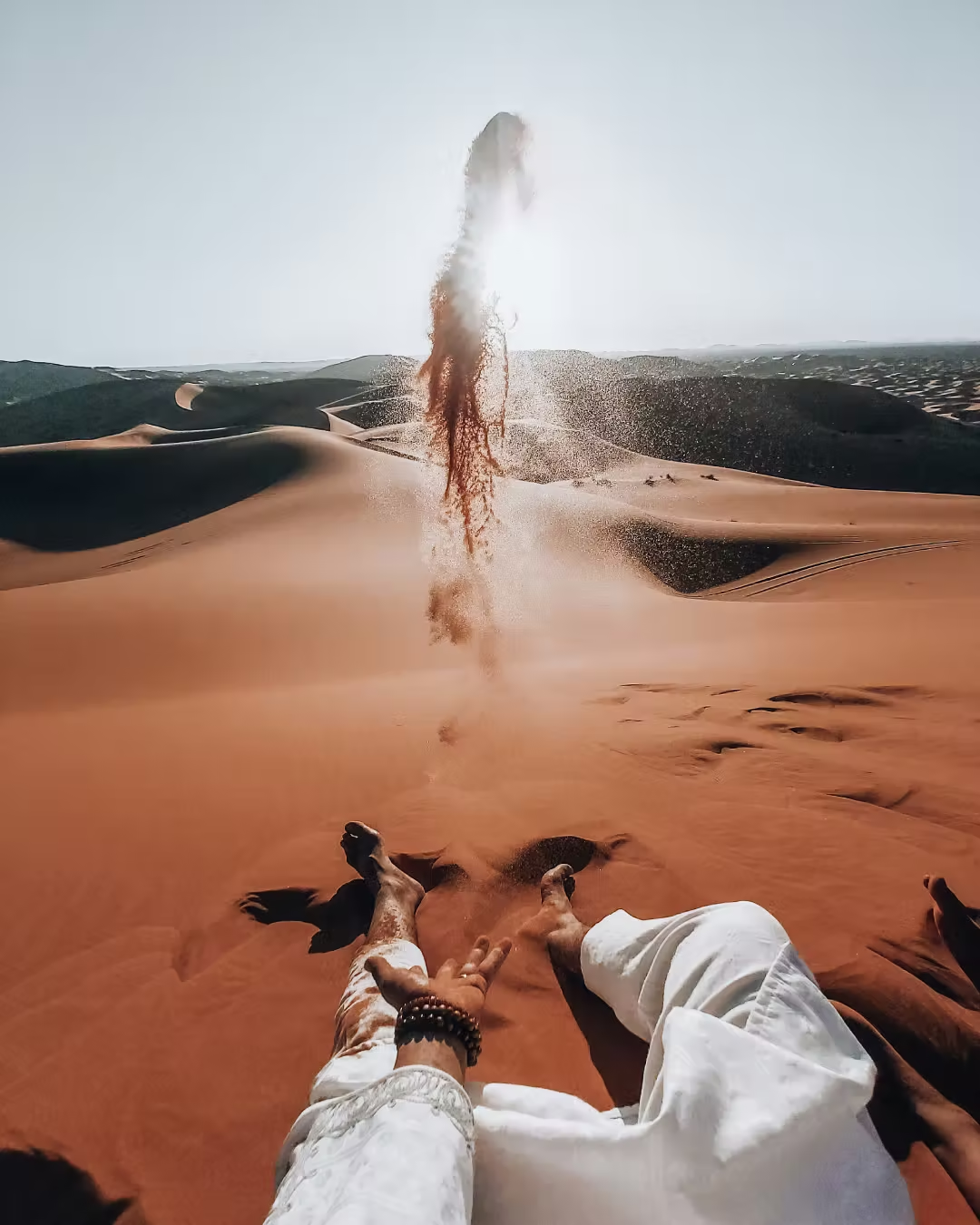 Witnessing the breathtaking silence of the Sahara with Maroc Explore's expert guides.
The Ancient Call of the Erg Chebbi Dunes
For centuries, the Sahara has been the heart of trans-Saharan trade routes, where salt, gold, and stories were exchanged between the Mediterranean and Sub-Saharan Africa. Today, the Merzouga region remains the most accessible gateway to these historic dunes. At Maroc Explore, we believe that understanding the history of the Amazigh (Berber) people is essential to appreciating the landscape. These dunes, reaching heights of up to 150 meters, are living structures, constantly reshaped by the "Chergui" wind. Our local guides, many of whom are descendants of nomads, share oral histories that bring these silent giants to life. You'll learn about the ancient navigation techniques involving the stars and the subtle changes in sand texture that indicate water sources hidden deep below the surface.
Why Slow Travel is the Key to the Desert in 2026
Search engines and travel experts in 2026 are emphasizing "deep immersion" and "low-impact" tourism. The Sahara is the perfect laboratory for this. Rushing into the desert for a quick photo and rushing out misses the point entirely. A Maroc Explore expedition encourages you to slow down. Spend your first afternoon simply watching the shadows lengthen across the crests of the dunes. The transition from golden yellow to deep ochre and finally a dusty violet at twilight is a visual symphony that requires patience. This slow-travel approach also allows your body to acclimatize to the desert atmosphere, ensuring you have the energy to enjoy the nocturnal magic that follows.
The Night Sky: A Celestial Masterpiece
One of the most significant benefits of a Maroc Explore desert trip is the lack of light pollution. In 2026, finding truly dark skies is becoming a luxury. Our secluded camps are positioned far from the noise of the main villages. As the campfire crackles, the milky way emerges with a clarity that is often shocking to urban dwellers. We provide telescopes at our premium camps, but even with the naked eye, the constellations feel close enough to touch. Our guides are experts at celestial navigation, explaining how nomads have used the North Star for generations to find their way across the featureless "Reg" (stony desert) surrounding the dunes.
Mastering the Camel Trek: Etiquette and Comfort
Riding a dromedary (the one-humped camel of the Sahara) is a rite of passage. While it looks simple, there is a physical "give and take" with the animal that makes the journey much more comfortable. Maroc Explore prioritizes animal welfare, working only with owners who maintain healthy, well-rested camels. When mounting, lean back as the camel rises on its back legs first, then forward. The rhythmic sway of the camel is hypnotic, mimicking the slow waves of the dunes themselves. We recommend wearing loose, breathable linen or cotton clothing and a "Cheche" (traditional turban) to protect your face and neck from the sun and sand. Your guide will teach you how to wrap the Cheche properly—a skill that is both practical and a sign of respect for local customs.
Sustainability and the Nomadic Future
At Maroc Explore, we are deeply committed to ensuring that our presence in the desert supports the local community and environment. Water is the most precious resource in the Sahara. Our camps use solar-powered water heating and advanced waste management systems to minimize our footprint. Furthermore, we directly support local cooperatives that provide education and healthcare for nomadic families transitioning to a more settled life. When you stay with us, you are part of a cycle of responsible tourism that preserves the Sahara's beauty for 2027 and beyond. We encourage our guests to "leave no trace," taking only memories and photographs, and leaving behind nothing but the temporary tracks of their camels.
Practical Tips for your 2026 Expedition
- Hydration: Drink more water than you think you need. The dry air evaporates sweat instantly, so you won't realize you're losing fluid until you feel fatigued.
- Temperature Swings: The desert is a land of extremes. Be prepared for 35°C during the day and 5°C at night. Layers are your best friend.
- Digital Detox: While we offer Wi-Fi at some base camps, we passionately recommend turning off your phone. The desert's greatest gift is silence.
- Photography: Protect your gear. Sahara sand is incredibly fine and can ruin lenses. Use UV filters and store your camera in a sealed bag when not in use.
The Final Word on the Sahara
As you leave the dunes, you'll find that a part of the desert stays with you. It's the memory of the absolute silence, the warmth of the Berber hospitality, and the realization of how small we are under the infinite stars. Maroc Explore is proud to be your bridge to this magical world. Join us in 2026 for a journey that transcends traditional tourism and touches the soul.