
Where Two Worlds Collide: A 2026 Guide to Tanger
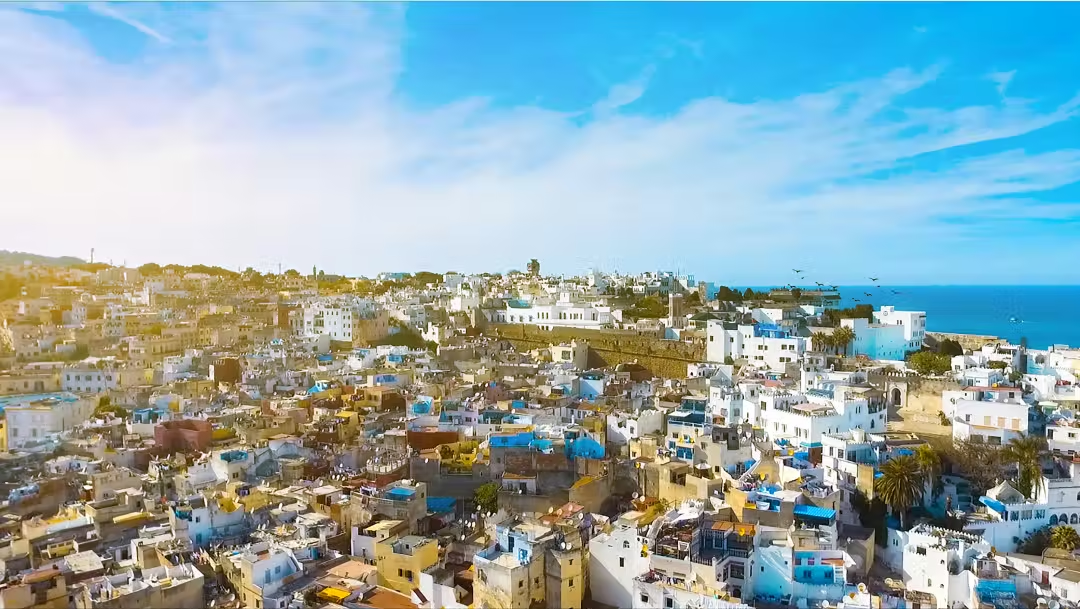
Looking across the Strait of Gibraltar toward the coast of Spain, Tanger (Tangier) sits at the absolute crossroads of the world. At Maroc Explore, we've witnessed the incredible transformation of this city—from a bohemian frontier town for spies and artists into a modern, cosmopolitan gateway. In 2026, Tanger is undergoing a massive renaissance, blending its "international zone" mystique with high-speed trains and restored historic districts. This guide explores the legendary cafes, the rugged coastline, and the unique, multicultural spirit of Morocco's most international city.
 Gazing out from the Africa-shaped window at the Caves of Hercules with Maroc Explore in Tanger.
The Kasbah: A Palace Above the Sea
Perched on the highest point of the medina is the Kasbah, the old fortified center of Tanger. Entering through the "Bab el-Assa" gate, we take our guests into the 17th-century Dar el-Makhzen (Sultan's Palace). This beautiful space, with its marble pillars and tiled courtyards, now houses the Kasbah Museum of Mediterranean Cultures. Walking along the ramparts, looking out over the blue waters of the strait toward Europe, you feel the strategic importance that has made Tanger a prize for everyone from the Phoenicians to the Portuguese. Our guides explain the "international" architecture that distinguishes Tanger from the more traditional inland cities.
The Ghosts of the Beat Generation: Tanger's Bohemian History
For decades, Tanger was a haven for writers, painters, and musicians seeking escape from Western norms. Characters like William S. Burroughs, Paul Bowles, and Tennessee Williams roamed these exact streets. Inside the medina, we visit the "Grand Socco," the beating heart where the old city meets the new. We stop at legends like "Café Hafa," where you can sit on tiered terraces overlooking the ocean, exactly where the Rolling Stones and Jack Kerouac used to seek inspiration. In 2026, Maroc Explore's tours focus on this "bohemian legacy," showing you the hidden bookshops and art galleries that continue to make Tanger a magnet for creative souls from around the world.
The Strait of Gibraltar: Where Seas Meet
A few kilometers outside the city center lies Cap Spartel, the extreme northwestern tip of Africa. This is where the Mediterranean Sea aggressively crashes into the Atlantic Ocean. We take our guests to the historic lighthouse to witness this geographical marvel. The rocky coastline here is rugged and spectacular, a far cry from the sandy beaches of the south. In 2026, Maroc Explore organizes "coastline expeditions" that combine a visit to Cap Spartel with a walk through the nearby "Caves of Hercules." Legend has it that the hero rested here before his 12th labor, and the famous "Map of Africa" window eroded into the stone offers a perfect photogenic frame for the ocean.
The International Zone: Architecture of the "Diplomatic Era"
From 1923 to 1956, Tanger was an "International Zone," jointly administered by several world powers. This era left an indelible mark on the city's architecture and character. We walk with our guests through the "Ville Nouvelle" (New Town), seeing grand European-style villas, "art deco" cinemas, and the famous American Legation—the first American public property outside the US. Our guides explain the unique legal and social atmosphere of this period, where spies, smugglers, and diplomats coexisted in a city of total freedom. It's a fascinating chapter of Moroccan history that makes Tanger feel entirely different from Fes or Marrakech.
Tanger Mediterranean: The 2026 Renaissance
Tanger is not just about its past; it is the center of a massive modern development project. In 2026, the new "Tanger Med" port and the "Al-Boraq" high-speed rail line have made the city more connected than ever. We take our guests for a stroll along the newly renovated "Plage Municipale" (city beach) and the sophisticated new marina. You'll see how Tanger is positioning itself as a major Mediterranean hub, balancing its historic grit with high-end restaurants and luxury hotels. At Maroc Explore, we emphasize this "forward-looking" energy, showing you how the city is maintaining its soul while embracing the future of global travel and commerce.
A Culinary Crossroads: Seafood and International Flavors
Tanger's food scene is as diverse as its history. You'll find traditional Moroccan tagines sitting next to Spanish tapas and French pastries. We organize seafood feasts at the port, where the Atlantic and Mediterranean bounty is grilled to perfection. In 2026, many of our guests enjoy the "international bistro" vibe of the Kasbah cafes. We'll introduce you to the local "Bessara" (fava bean soup)—a staple of the Tanger working class—and the distinctive sweets that reflect the city's Andalusian influence. It's a culinary journey that perfectly mirrors the city's role as a gateway between continents.
2026 Tanger Practical Tips
- Language: Tanger is a linguistic polyglot. You'll hear Arabic, Spanish, French, and English in equal measure.
- Timing: Café Hafa is best visited at sunset. The Cave of Hercules can be very busy on weekends; try a weekday morning.
- Walking Scale: The medina is steep. Prepare for a workout for your legs as you move from the port up to the Kasbah.
- High-Speed Rail: The "Al-Boraq" train connects Tanger to Casablanca in just 2 hours. It's an incredible, luxury experience in itself.
The Gateway Legacy
Tanger is a city that looks both ways—at the history behind it and the world across the water. Its unique energy, born of a century of international influence, makes it a fascinating chapter in any 2026 Moroccan journey. At Maroc Explore, we are proud to be your bridge to this cosmopolitan dream. Join us to discover why Tanger remains the world's most captivating crossroads.